


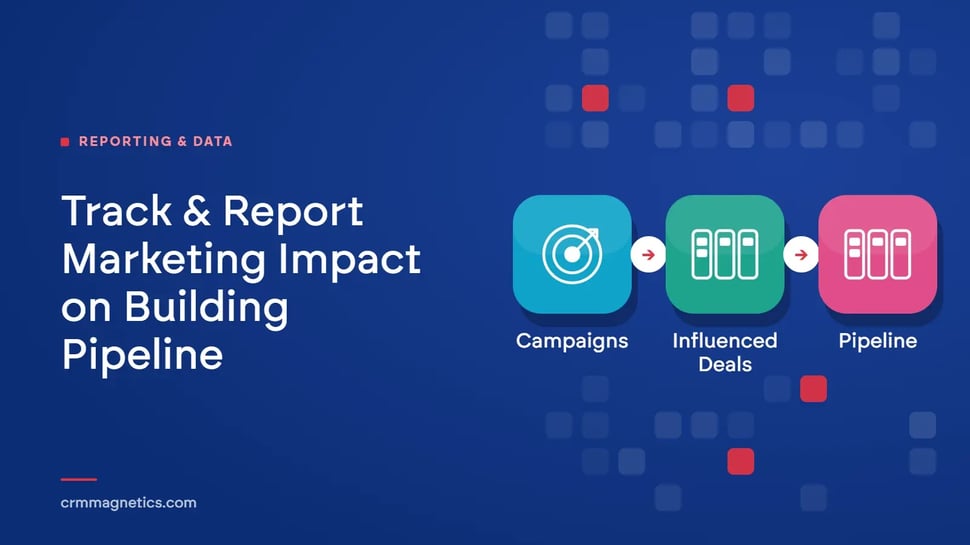
In B2B environments with large deal sizes and long sales cycles, marketing rarely closes deals directly. But marketing still plays a crucial role in building and closing pipeline:
- Builds trust with prospects
- Adds value by positioning your team as experts
- Educates about product offerings
- Highlights pain points and how you solve them
- Shares pricing information over time
- …and more
Yet, tying those efforts to actual revenue remains a challenge. This blog explains our proven HubSpot implementation for quantifying marketing’s true contribution to pipeline revenue.
Who Is This For?
This approach is designed for B2B companies that:
- Sell high-value solutions (average deal around $100k+)
- Operate with 20–30+ touchpoints in their marketing + sales cycle
- Need clear metrics to justify marketing spend against revenue goals
The Problem
It’s difficult to convert marketing-driven engagements into tangible revenue credit. While marketing efforts generate trust, education, and awareness over many touchpoints, those interactions don’t map neatly to dollars.
Without a clear method to attribute a percentage of each deal’s value back to marketing, you can’t accurately demonstrate marketing’s ROI.
Our Approach
We built a HubSpot system that is justifiable and has a great track record of organizational buy-in across multiple accounts.
The following diagram visually breaks down each step of our HubSpot implementation:
Step 1: Apply credit caps
Set maximum marketing credit by opportunity type:
- Net new accounts: 40–50%
- Existing accounts: 20–30%
Step 2: Assign marketing engagement score
Score each contact’s marketing engagement:
- Email opens & clicks
- Site & form interactions
- Ad interactions & conversions
- Other marketing-driven engagements
- Score decays over time (last 24 months)
Step 3: Evaluate on deal open
When a deal enters pipeline:
- Retrieve contact’s engagement score
- Consider first-touch conversion
- Calculate marketing credit % before and after caps
Step 4: Calculate dollar credit
Multiply credit % by deal value:
- Deal value × final marketing % = marketing-attributed revenue
Step 5: Report impact & ROI
Track marketing’s contribution over time:
- Aggregate marketing-attributed revenue in dashboards
- Measure ROI and optimize credit rules
Benefits & Next Steps
- Full visibility into marketing’s percentage of pipeline revenue
- Clear ROI justification for marketing budgets
- Actionable insights on which campaigns drive high-value interactions
- Ongoing optimization by tweaking caps or credit rules as your model evolves
Ready to give marketing a quantifiable seat at the revenue table? Schedule a strategy call today to see a live demo and custom pricing.
Leave your thought here
Your email address will not be published. Required fields are marked *