


- January 16 2026
- Nikias Kray
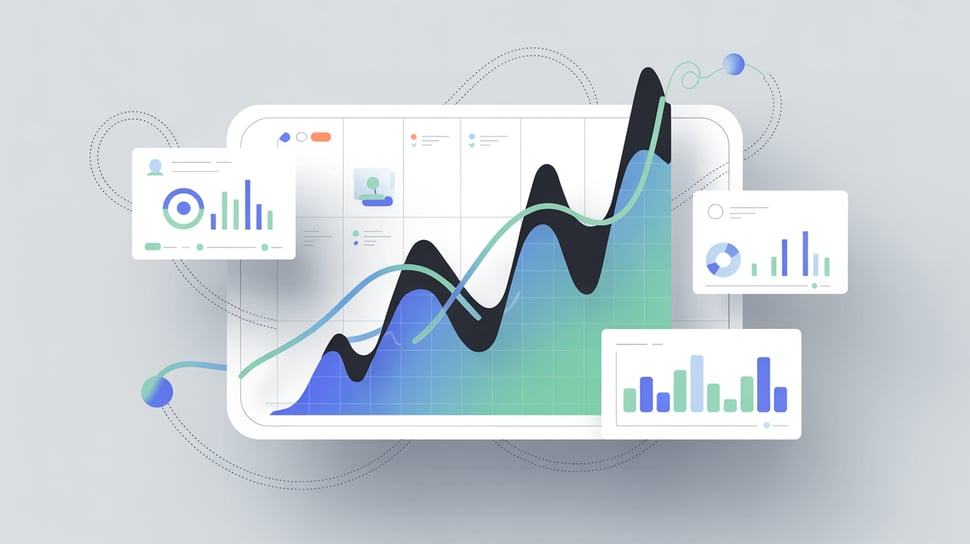
Dashboards didn’t fail because they were wrong.
They failed because they were irrelevant.
By 2026, most companies track more metrics than ever — and understand their business less than before. Marketing reports clicks, sales reports pipeline, finance reports revenue, and nobody can confidently explain what will happen next week.
The problem isn’t data.
The problem is what you choose to look at.
This article is about the KPI dashboards that actually help businesses grow — not by overwhelming teams, but by creating weekly clarity.
Why “more KPIs” made decisions worse
At some point, dashboards became decorative.
They answer questions like:
-
How many sessions did we get?
-
How many leads came in?
-
How many emails were sent?
But they avoid the uncomfortable ones:
-
Are we responding fast enough?
-
Where does pipeline slow down?
-
Which leads actually turn into money?
-
What broke last week?
In 2026, dashboards that don’t influence weekly decisions are noise.
Good KPI dashboards don’t describe the past.
They warn about the near future.
The mindset shift: KPIs are signals, not scores
The biggest mistake teams make is treating KPIs like grades.
CTR up? Good job.
Pipeline up? Success.
Revenue flat? Weird.
In reality, KPIs are signals. They exist to highlight friction before it turns into missed revenue.
That’s why the most valuable KPIs in 2026 are not vanity metrics — they’re operational indicators.
Why weekly tracking matters more than monthly reports
Monthly reports are for post-mortems.
Weekly dashboards are for control.
Revenue rarely collapses in a day.
It degrades slowly — through delayed follow-up, stalled deals, poor lead quality, and broken handoffs.
When KPIs are tracked weekly, teams can:
-
fix issues while deals are still recoverable
-
adjust campaigns before budget is wasted
-
intervene before forecasts become fiction
This is exactly why HubSpot positions dashboards as living tools, not static reports, within its reporting system.
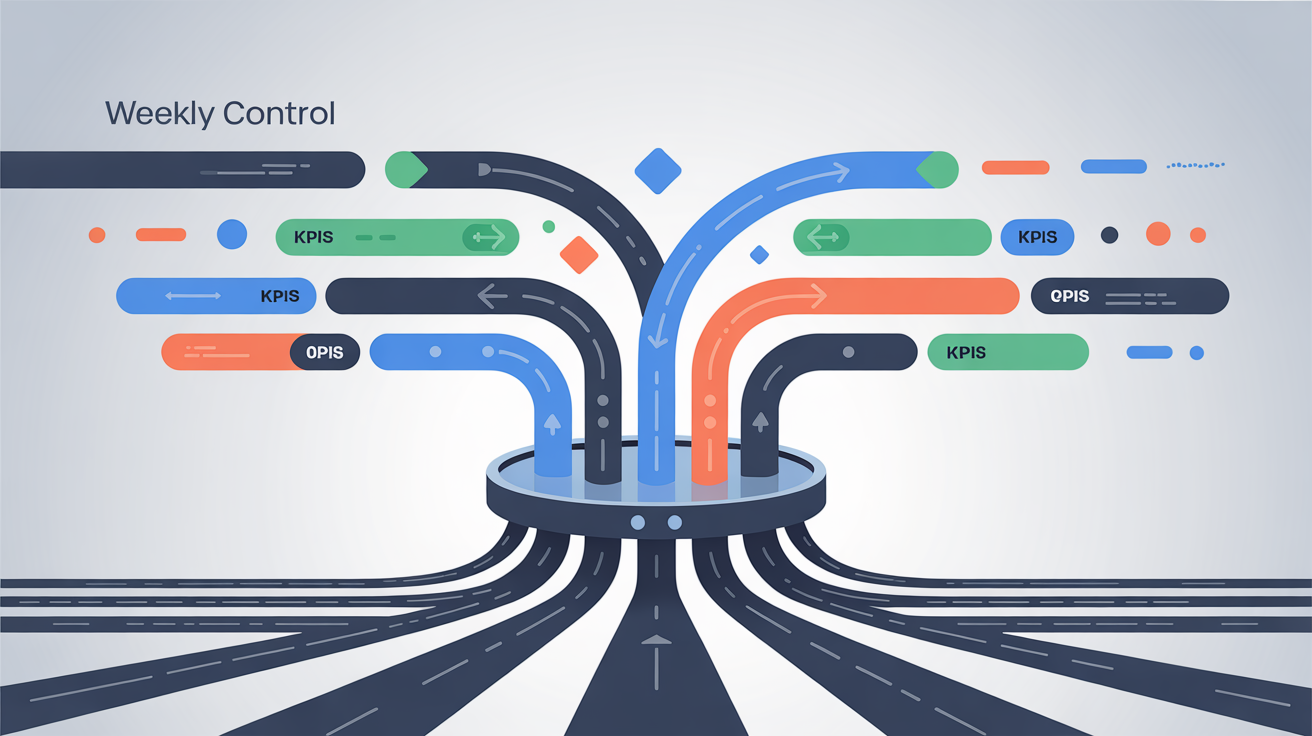
The four KPI layers every 2026 dashboard must include
Strong dashboards are layered.
They don’t try to show everything — they show what breaks revenue first.
Revenue flow (what leadership actually cares about)
This layer answers one question: Is revenue momentum healthy?
Instead of focusing on closed deals only, it tracks:
-
pipeline creation vs target
-
pipeline velocity
-
average deal aging
-
forecast risk indicators
These metrics show whether future revenue is forming — or quietly stalling.
When pipeline velocity slows, it’s already too late to “push harder”.
Something upstream is broken.
Lead handling (where revenue leaks silently)
Most companies obsess over lead volume and ignore lead handling.
In 2026, this is unforgivable.
Weekly dashboards must clearly show:
-
speed-to-lead
-
% of leads contacted within SLA
-
lead-to-meeting conversion
-
drop-off between lifecycle stages
These KPIs don’t look impressive.
But they explain why revenue misses targets.
HubSpot’s lifecycle model makes this visibility possible when configured correctly, as outlined in HubSpot lifecycle stages documentation.
Sales execution (where forecasts lie)
Sales dashboards often show pipeline size and win rate — but hide execution quality.
In 2026, healthy dashboards surface:
-
stalled deals by stage
-
time spent in each stage
-
follow-up gaps
-
inactivity thresholds
These metrics remove emotion from sales discussions.
Instead of “this deal feels close”, you get:
“This deal hasn’t moved in 21 days.”
Clarity replaces optimism.
Marketing impact (beyond clicks and leads)
Marketing KPIs must answer a simple question:
Is this activity creating revenue momentum or just motion?
That means tracking:
-
qualified leads by channel
-
pipeline influenced by source
-
conversion by lifecycle stage
-
CAC trends over time
Search visibility still matters and should be monitored through Google Search Console. Engagement and conversions are tracked in GA4 key events. But revenue truth lives in CRM.
Dashboards must reflect that hierarchy.
Why dashboards fail without automation
Even the best KPI framework collapses if data is manual.
When metrics depend on people:
-
updating stages correctly
-
logging activities consistently
-
remembering to tag sources
dashboards become aspirational.
This is why in 2026, KPI dashboards only work when paired with automation:
-
automatic lifecycle updates
-
enforced stage logic
-
inactivity monitoring
-
conversion tracking
Automation doesn’t just save time.
It protects data integrity.
Who should own KPI dashboards (and who shouldn’t)
Dashboards fail when everyone “kind of owns them”.
In high-performing teams:
-
leadership defines what matters
-
RevOps / CRM owners define how it’s measured
-
sales and marketing align around the same numbers
Dashboards are not marketing assets.
They are operating tools.
This is where HubSpot-centered RevOps models outperform fragmented stacks.
Why most companies track the wrong KPIs
Because the wrong KPIs are comfortable.
They don’t challenge teams.
They don’t expose friction.
They don’t force decisions.
The right KPIs do all three.
That’s why many teams subconsciously avoid them.
Why CRM Magnetics builds KPI dashboards differently
At CRM Magnetics, dashboards are not built for reporting meetings.
They’re built for weekly control.
We design KPI dashboards that:
-
align marketing, sales, and leadership
-
surface revenue risk early
-
eliminate manual reporting
-
tie activity to outcomes
Dashboards are always implemented as part of HubSpot setup and automation — never in isolation.
HubSpot Setup & Automation by CRM Magnetics
Final thought
In 2026, the most dangerous thing a business can say is:
“We’ll know next month.”
Good KPI dashboards make problems visible this week.
If your dashboards look good but don’t change behavior, they’re lying to you.
And if you want dashboards that actually help you grow revenue — not just report on it — we should talk.
Talk to CRM Magnetics about KPI dashboards that drive decisions
Turn reporting into a control system, not a slideshow
Leave your thought here
Your email address will not be published. Required fields are marked *