


- January 2 2026
- Nikias Kray
SEO has a measurement problem.
Not because we can’t track clicks or rankings — we can.
But because traffic stopped being the metric that matters.
In 2026, SEO without revenue attribution is just content marketing with better branding. Companies still celebrate growth in impressions and sessions, while quietly asking the same uncomfortable question at board meetings:
“Okay… but how much money did this actually bring in?”
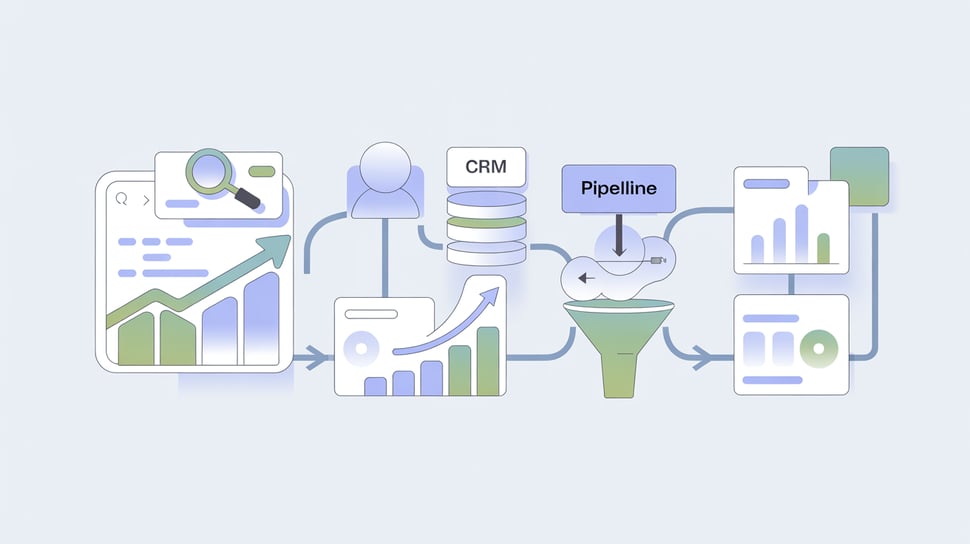
This is where SEO must connect to HubSpot — not as a “nice integration”, but as a single system that tracks organic demand from first click to closed deal.
Why SEO reporting broke (and why HubSpot fixes it)
For a long time, SEO lived in its own world.
Search Console showed impressions and positions.
Google Analytics showed sessions and bounce rate.
Sales lived somewhere else entirely.
The result was predictable: SEO was judged by traffic, not outcomes.
Google itself never promised traffic would convert. In fact, modern search is explicitly about intent and usefulness, as described in Google’s Helpful Content guidelines. AI-driven search only accelerated this shift by recommending sources, not pages.
In this environment, SEO that isn’t connected to CRM is blind.
HubSpot changes that by becoming the system of record for what happens after the click.
Organic search doesn’t end on the page — it starts there
The biggest SEO misconception is that the job ends when someone lands on your site.
In reality, that’s where the hard part begins.
Organic visitors arrive in very different states:
some are researching, some are comparing, some are ready to talk. Treating them as one group is how revenue disappears quietly.
HubSpot allows SEO to extend beyond the page by:
-
capturing organic leads with context
-
preserving source and intent data
-
tracking lifecycle movement over time
This is why SEO + HubSpot is not about “integration”, but about continuity.
Search Console tells you why they came.
HubSpot tells you what happened next.
The difference between organic traffic and organic leads
Traffic is anonymous.
Leads are accountable.
In 2026, strong SEO systems are built around lead intent, not pageviews. That means content is designed not only to rank, but to guide the next action — booking a call, requesting a demo, starting a conversation.
When those actions are captured in HubSpot, organic search stops being a vague channel and becomes a lead source with history.
This is where lifecycle stages matter. HubSpot’s lifecycle framework allows teams to see how organic contacts evolve over time — from first touch to opportunity — as explained in HubSpot lifecycle stages documentation.
SEO becomes longitudinal, not transactional.
Why GA4 alone is not enough in 2026
GA4 is powerful, but incomplete on its own.
It excels at event-based tracking and cross-channel measurement, especially when configured properly using GA4 key events. But GA4 still struggles with long B2B sales cycles, multi-touch journeys, and deal-level attribution.
HubSpot fills that gap.
GA4 answers:
What happened on the site?
HubSpot answers:
What happened in the business?
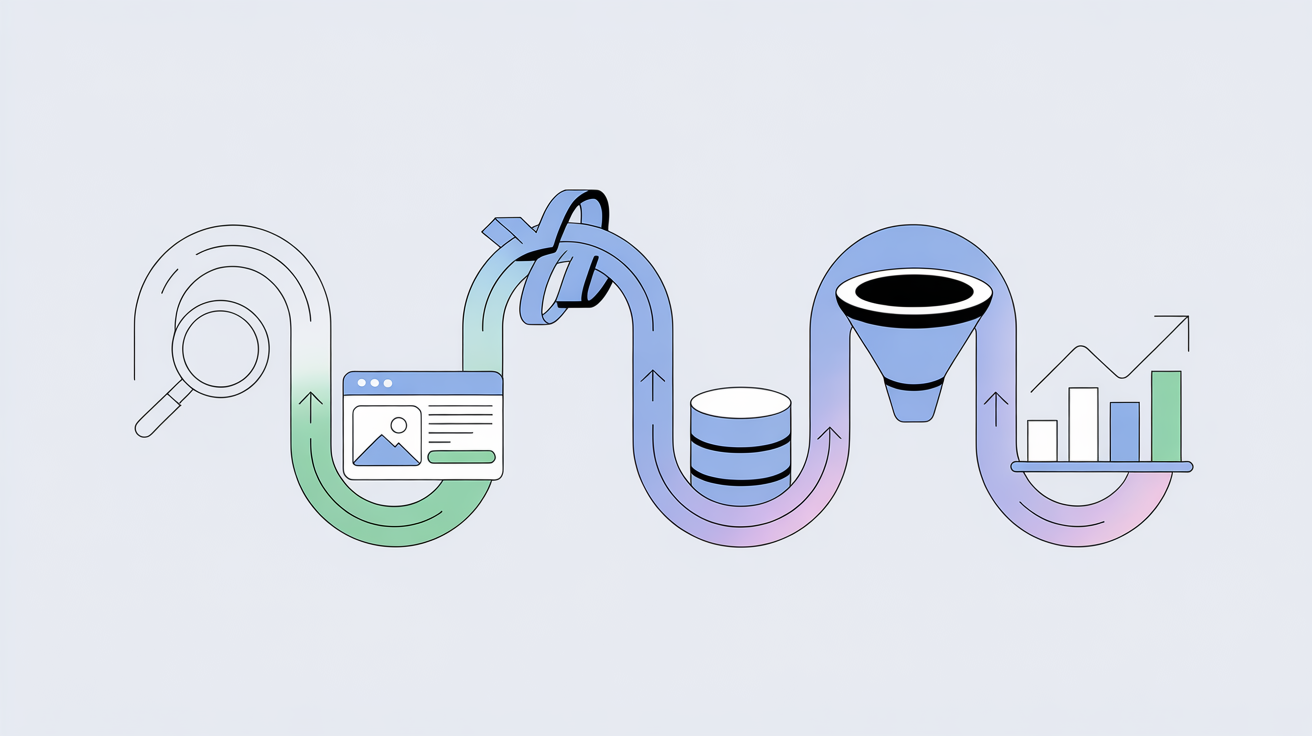
When combined, they form a closed loop:
-
Search Console → visibility and intent
-
GA4 → engagement and conversions
-
HubSpot → pipeline and revenue
This is how SEO becomes board-ready.
SEO in 2026 is optimized for AI — HubSpot makes it measurable
AI search systems don’t rank pages the way Google used to.
They interpret, summarize, and recommend.
This means SEO content must be:
-
clearly structured
-
entity-driven
-
trustworthy
-
connected to real outcomes
But here’s the part most teams miss: AI visibility still needs business validation.
If AI systems surface your content, but you can’t trace those interactions to leads and revenue inside HubSpot, you’re guessing again — just with fancier tools.
SEO for AI without CRM is still incomplete.
How SEO + HubSpot changes decision-making
Once SEO is connected to HubSpot, conversations change.
Instead of:
“Traffic is up, but sales are slow.”
You get:
-
which organic pages generate qualified leads
-
which queries influence deals
-
how long organic leads take to convert
-
which content supports pipeline acceleration
SEO becomes a strategic input, not a reporting artifact.
This is exactly why SEO should be implemented as part of a broader CRM and automation strategy, not as a standalone channel.
Related service: SEO – Grow Your Business With Precision Targeting & Ongoing Support
Why most companies never close the loop
Not because the tools are bad.
But because connecting SEO to HubSpot forces clarity:
-
what counts as a lead
-
what content is meant to convert
-
how sales follows up
-
how revenue is attributed
Many teams prefer ambiguity. It protects comfort.
But in 2026, ambiguity is expensive.
Why CRM Magnetics builds SEO around HubSpot
At CRM Magnetics, SEO doesn’t live in isolation.
It’s designed to feed a revenue system.
We connect:
-
search intent
-
content strategy
-
technical SEO
-
GA4 and Search Console
-
HubSpot CRM and automation
So organic growth is measured not by traffic spikes, but by revenue consistency.
If you want SEO that can be explained to sales, leadership, and investors — not just marketers — this is where it starts.
Explore HubSpot Setup & Automation with CRM Magnetics
Final thought
In 2026, SEO without HubSpot is incomplete.
HubSpot without SEO is underutilized.
Together, they turn organic visibility into something businesses actually care about: predictable revenue.
If your SEO reports still stop at traffic, it’s time to finish the system.
Talk to CRM Magnetics and turn SEO into an end-to-end revenue channel
Leave your thought here
Your email address will not be published. Required fields are marked *